Drought and water restrictions in the Western Cape: 6 ways to get more out of every drop

by Grethe Bestbier and Johan Myburgh.

As Cape Town announces Level 1 water restrictions from the first of December, many Western Cape farmers will soon face a 15% reduction in irrigation water allocations. When every drop counts, every part of your irrigation system matters.  

Key takeaways

  • On 16 November 2026, the Department of Water and Sanitation announced a 15% cut to irrigation allocations from the Western Cape Water Supply System (about 29.6 million m³ a year) 
  • The cuts are a precautionary measure, in response to below-average winter rainfall, falling dam levels and forecasts of a strong El Niño summer.
  • You don’t need a new irrigation system to save water. Fixing leaks and blockages, checking pressure and irrigating at the right time of day reduce losses quickly.
  • Uniform application, avoiding over-irrigation, targeted upgrades and measuring flow and soil moisture all increase efficiency and help the correct amount of water to reach the root zone.

Why are there water restrictions in the Western Cape? 

Due to below-average winter rainfall and declining dam storage (around 70%) in the Western Cape, The Department of Water and Sanitation is now requiring the public and businesses to reduce water usage by at least 10%. 

With experts predicting a very hot and dry El Niño summer, the need to reduce consumption is even more urgent. Many Western Cape farmers will be expected to manage with a 15% cut in agricultural irrigation allocations, amounting to about 29.6 million cubic metres per year. 

Can farmers save water without installing a new irrigation system?

For farmers, these cuts also come at a difficult and critical stage in the production cycle for various crops, like table and wine grapes, stone fruit, berries, and more. 

Farmers don’t necessarily need to invest in an entirely new irrigation system to improve water efficiency. There are often practical improvements you can make to an existing system to reduce water losses, improve efficiency and make better use of your available water.

What is irrigation uniformity and why does it matter?

When discussing water-usage, we often refer to uniformity. Why does uniformity go hand in hand with water-usage? Uniformity refers to delivering the same amount of water to every part of the field. 

With non-uniformity, the result will be that some plants require water before others. The question becomes: Do you water, or not? 

  • If you do, you will waste water in the wet areas.
  • If you don’t, you will reduce the yield in the dry areas.

Thus, having great uniformity is the only way to ensure optimal water-usage

1. Maintenance is water management

While there is not enough time for a new irrigation design, there is enough time to check that your current irrigation system is functioning efficiently. Do a thorough inspection:

  • Is anything leaking? This is not the time to tolerate water wastage. Inspect your pipelines, joints, valves and all connections for leaks. 
  • Is my filtration system working? Check that your filters are working optimally to ensure consistent water delivery. Unnecessary or inefficient backwash of filters can also lead to additional water losses. 
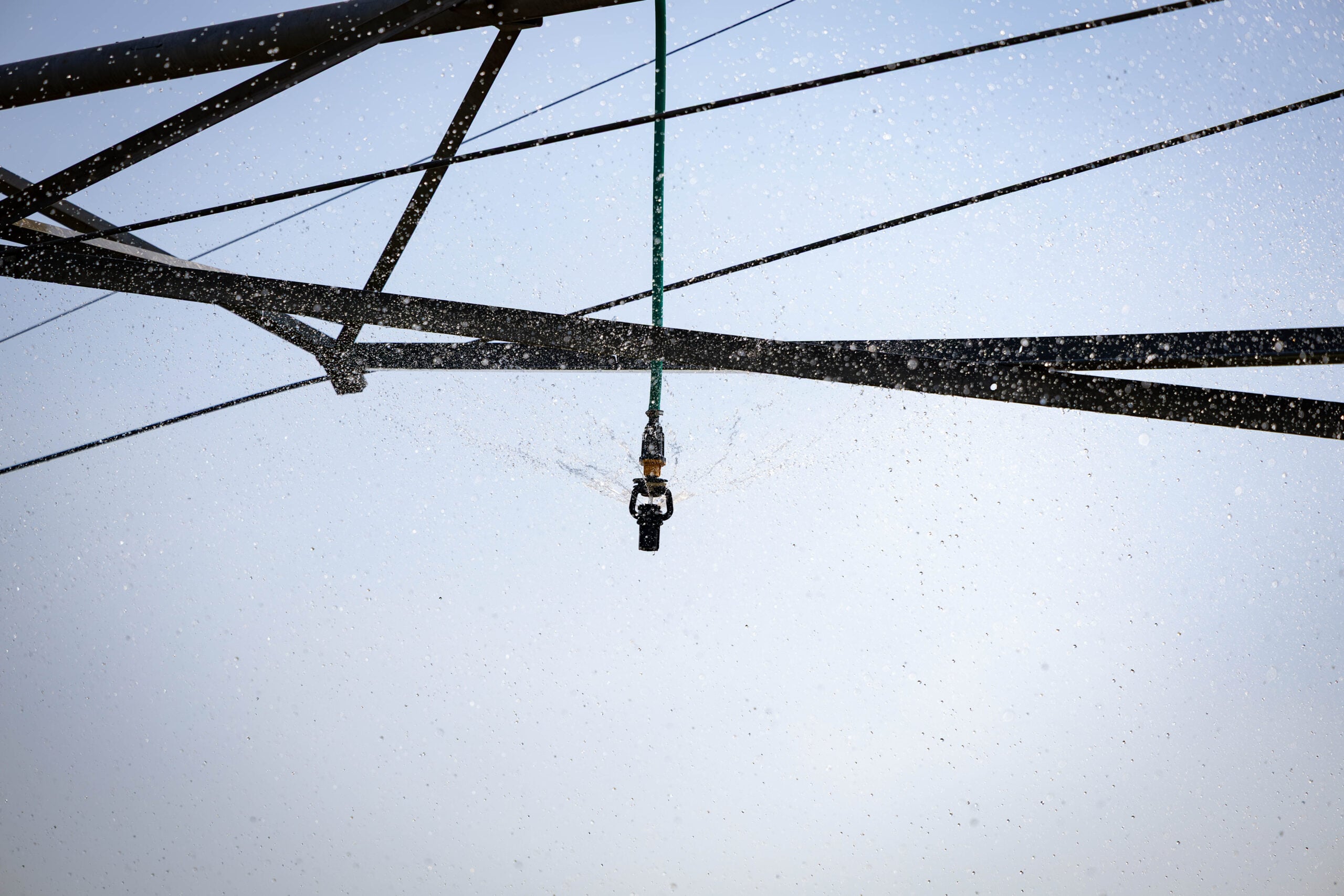
  • Is anything blocked or broken? Blocked lines, outlets, filters or emitters can affect your water distribution and irrigation uniformity, leading to unnecessary wastage. Check all your outlets and flush lines where necessary. In the case of centre pivots, blocked nozzles should be flushed and damaged nozzles replaced. 

2. Check pressure to reduce water losses

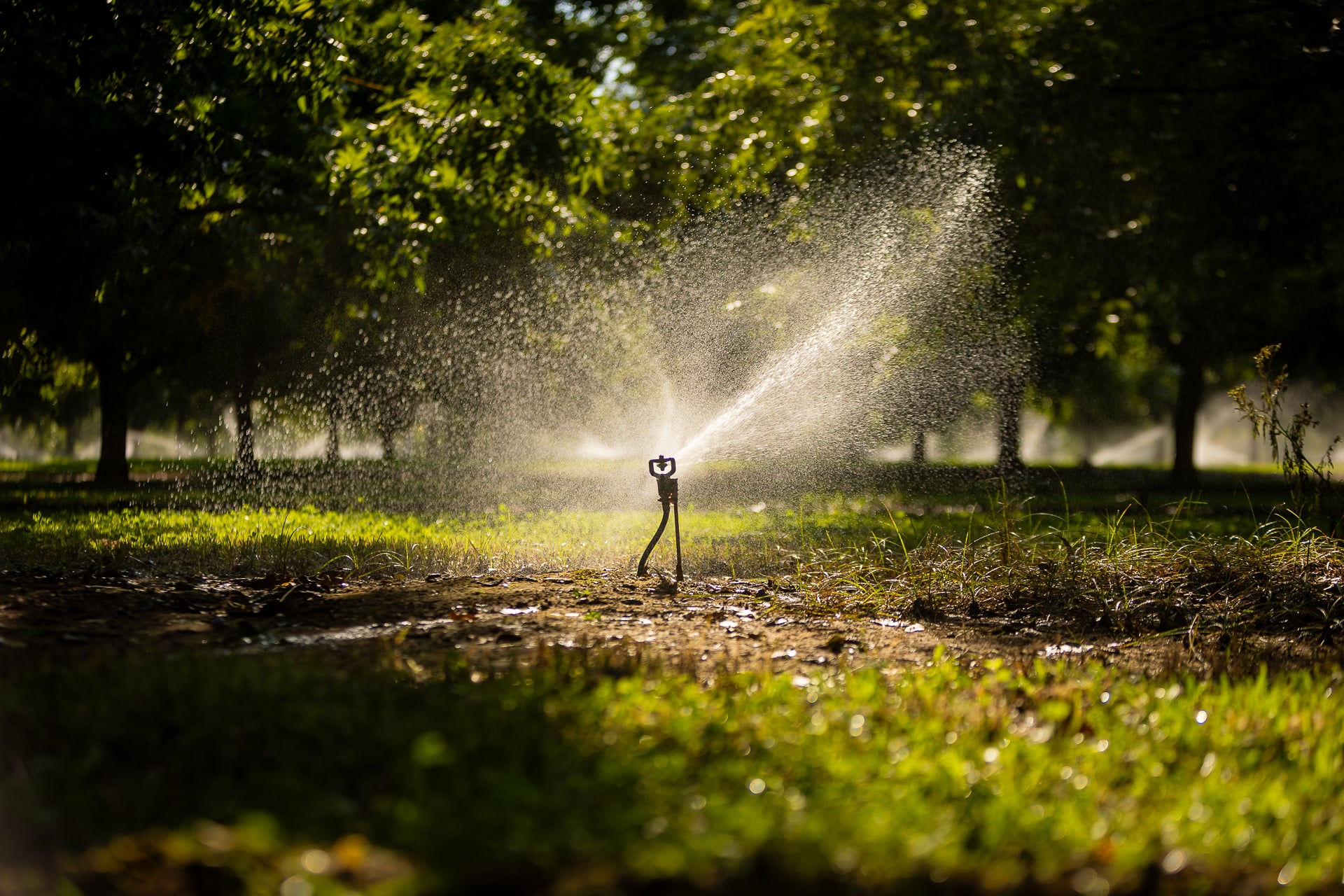
Any well-designed irrigation system is meant to operate at a specific pressure. This number is critical for optimal performance and application. If your system is running at too high a pressure, you risk misting, which can increase evaporation and lead to water wastage. On the other hand, at too low a pressure, you risk under-irrigating and non-uniform application. 

Check your operation pressure on your system’s pressure gauges while it is irrigating to ensure that it runs at the intended pressure. If you are unsure about what the pressure should be, ask your irrigation designer for assistance. 

3. What is the best time of day to irrigate?

When the goal is to reduce water use, it is critical to ensure that more of your irrigated water reaches the intended area. Irrigating at the right time of the day ensures that every drop of water is actually infiltrated in the soil and reaches the plant’s roots, while minimizing water losses due to run-off and evaporation. Here are some tips:

  • Avoid windy conditions: Wind can cause droplets to drift away from the intended irrigation area, resulting in water losses. 
  • Irrigate in the early mornings or at night: Evaporation due to wind and heat are usually far less during the night, when temperature drops and wind speeds are reduced. 
  • Avoid the hottest part of the day where practical: If you do irrigate during the day, try to avoid the hottest parts of the day. Do note that irrigating in the heat of the day can help form a micro-climate which protects the plants. This is something to consider and weigh up against one another.

4. How to improve your efficiency and avoid over-irrigation 

Every crop has a specific water requirement. This is the ideal amount of water that a plant needs to thrive, and is based on your area’s evapotranspiration factor, the crop as well as its growth stage. This is a mathematical equation that an Agrico expert can help you make. 

In irrigation, great efficiency simply means delivering every drop of this required water to the root zone, where it can be used by the plant. 

Issues like over-irrigation, spacing, flow rates and sprinkler choice all affect efficiency. We need to ensure that we do not exceed the soil’s infiltration rate. This will lead to puddling and thus evaporation, as well as water run-off. Here are a few practical tips to improve efficiency: 

How to improve efficiency in micro-irrigation systems? 

  • A common cause of over-irrigation is irrigating in areas where the plants we are growing cannot access it. 
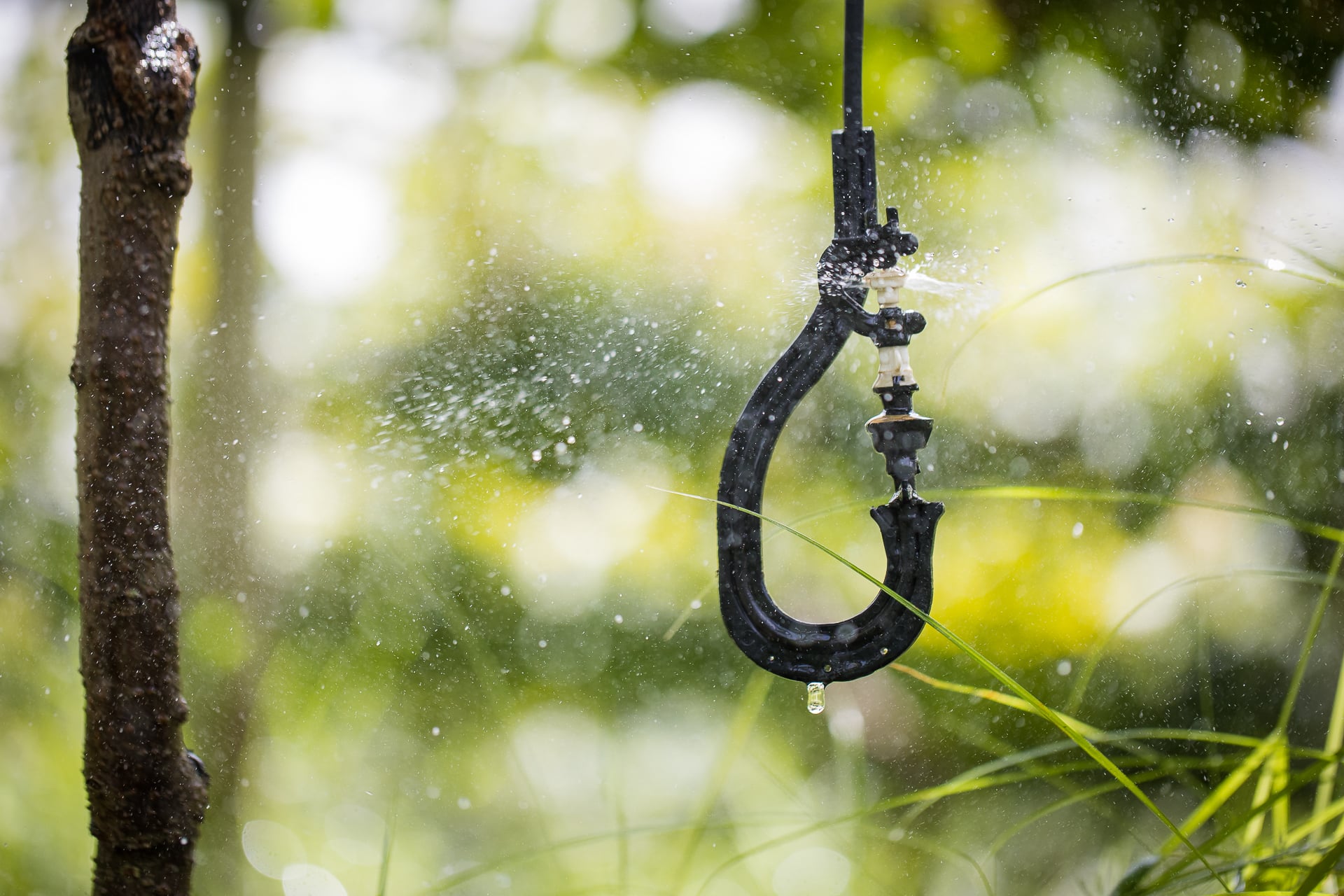
  • Inspect the wetted widths of your micro-sprinklers. Ensure that the water is placed where the root zones are. If your wetted widths are too wide, opt for narrow-range emitters or adjust the heights of your hanging micro-sprinklers to minimise evaporation. 
  • Be careful though: Not irrigating quite wide enough can also lead to run-off and poor uniformity. To find the perfect balance, talk to an expert at Agrico. 
  • Where root systems are well developed and the soil structure allows it, you can afford to irrigate less frequently, but longer at a time. This helps reduce evaporation. 

How to improve efficiency in drip-irrigation systems?

  • Drip emitter flow rates and spacing should be correctly selected according to the soil type and crop spacing to ensure optimal water use and uniform irrigation.
  • With drip-irrigation it is often easy to miss over-irrigation, as the water is applied directly to the soil. Therefore, it is important to know your soil structure and irrigation depths. 
  • Measuring and checking soil moisture content at different depths in the profile is critical. 

How to improve efficiency in centre pivot irrigation?

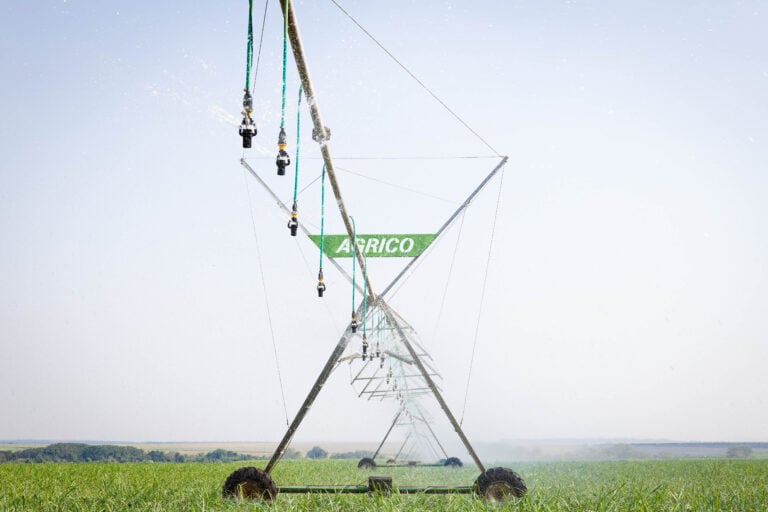
  • Consider your sprinkler package choices!
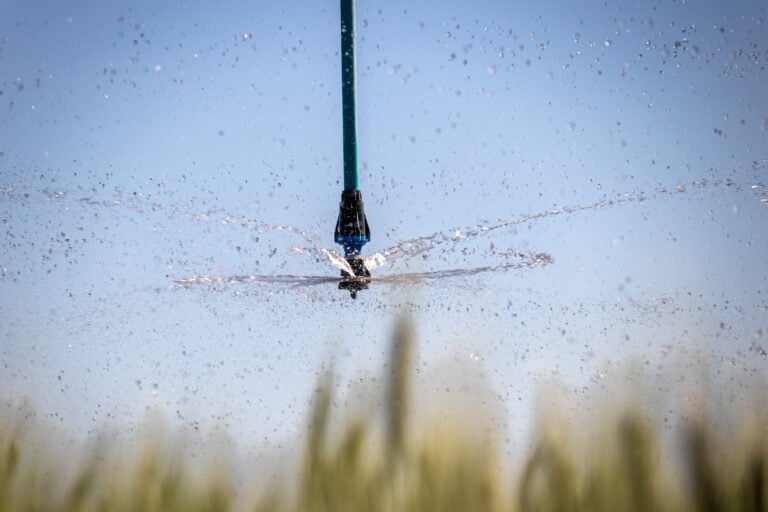
  • Options like LEPA (Low Energy Precise Application) places pivot sprinklers much closer to the ground. As with drip- and micro-irrigation, the water is placed directly at the root zone, greatly reducing evaporation due to strong winds and high temperatures.
  • A LEPA configuration does have some other compromises, so speak to an Agrico expert to find out if it is the right solution for you. 
  • A modern option like the Nelson Orbitor offers a great balance. The sprinkler is designed for efficiency and uniformity. Its large droplets create little to no mist, minimising wind drift and evaporation losses. The strutless design also minimises droplet breakup, drift and drool.

5. Which irrigation upgrades save the most water?

The cost of a few irrigation upgrades might look daunting, but is often minimal when compared to its significant benefits. 

For drip- and micro-irrigation, the system design is critical to have a proper and uniform delivery of water to each plant. A great design allows you to manage your water-use in such a way that each plant receives just the right amount of water for optimal production. 

This goes hand-in-hand with the pressure at each emitter. Where the topography makes it difficult to get a uniform pressure at and thus delivery from each emitter, pressure compensating emitters ensure that each plant gets the right amount of water.

In the case of pivot irrigation, a new sprinkler package can be installed on any brand of pivot, and can be incredibly advantageous to your water usage. Sprinkler features matter. Sprinklers with a higher efficiency means less irrigation is needed to get the right amount of water to the crops. Larger droplets resist drift and unnecessary evaporation, while high trajectories and wide patterns can increase losses. 

Systems like LEPA are highly efficient by reducing drift and wetting only narrow paths. Once again, be careful to irrigate wide enough. If not, you can sit with unnecessary run-off and poor uniformity. 

Table 1: Efficiency of various irrigation methods

Irrigation method Efficiency according to SABI How to improve efficiencies
Drip-irrigation 90 – 95%
(statistically the most efficient)
  • Do not over-irrigate
Micro-irrigation 80 – 85%
  • Avoid wind loss and evaporation
  • Be careful of puddling or run-off
  • Do not deliver water where no roots / only weeds are
Centre pivots 80 – 90%
  • Opt for an efficient sprinkler package
  • Sprinklers that reduce loss and evaporation
  • Ensure infiltration and no puddling or run-off
Macro-irrigation and impact sprinklers 75 – 90%
  • Wind loss and evaporation
Flood irrigation 60 – 95%
  • Has to be very well managed to be uniform
  • Water has to be able to infiltrate the soil, but the soil has to be able to retain the water
  • Poorly managed systems often have large marshes at the bottom of the field

6. How to measure irrigation water use and soil moisture

To measure is to know, and with water delivery, this is just as applicable. Installing flow meters can help you measure the rate of delivery and total water delivered to an irrigation system. When compared to the design specification, it can serve as a warning if there are possible problems in your system. 

Know what goes on in your soil

The plant only cares whether it has easily available water in the soil profile or not. Therefore, knowing what goes on in the soil counts.

There are many tools available to the producer:

  • Dig profile/trial pits – This is the trusted and most reliable method to know what goes on below the soil. Using a soil auger is a quicker and cheaper alternative with less clarity.
  • Use water measuring instruments such as continuous logging probes, tensiometers, and neutron moisture probes.  Ensure that all probes are in representative positions and that the probe lines have been meticulously checked.  
  • Satellite and drone imagery like NDVI, NDMI, NDWI, multispectral cameras etc. These can give a rough indication of problem areas in the plants or soil. 

While these tools can help improve irrigation efficiency, none should be seen as a silver bullet. Every farm is different, and the best approach depends on your specific conditions and requirements. 

For the best advice on how to face these new challenges, speaking to an expert is always the best option.

Our team is ready to help you find the right solutions for your farm, call +27 21 950 4111, email info@agrico.co.za, or visit www.agrico.co.za.

Related articles

Feeding the nation one Agrico pivot at a time: Seunkie Maseko and Moosa Ngwenya

For Moosa Ngwenya and Seunkie Maseko, farming is about more than just growing crops. It is about the broader responsibility of feeding a nation and helping build a country.

“We have a country to feed, and we have a country to build,” says Moosa.

“As farmers, you wake up in the morning, and you don’t only think about the crops, but also about the people you have to feed. It’s all about food security.

Read More »
Uncategorized

Pivot design 101: A framework for getting it right

Drawing on Agrico’s extensive experience in irrigation design, this article explores the key considerations behind creating efficient, reliable irrigation systems, from water availability and crop requirements to pivot sizing, energy consumption and sprinkler selection.

Read More »
Uncategorized

Absa and Agrico join forces to make pivot finance more accessible

Absa AgriBusiness has partnered exclusively with Agrico to offer qualifying clients preferential finance on new pivot irrigation systems, with interest rates from as low as prime less 2%. The partnership provides farmers with flexible repayment structures, faster turnaround times and access to Agrico’s extensive irrigation service network across Southern Africa.

Read More »