Part 3: Comparing various sprinkler options

A sprinkler package is a system designed to deliver water efficiently and consistently to crops. A sprinkler package includes key components that work together to control pressure, flow, and distribution. 

What does a sprinklers package consist of? 

Regulator

A regulator is used to regulate the pressure that passes to the nozzle and thus to the sprinkler. This means that water can be supplied to the regulator at pressures as high as 600 kPa and it will deliver a constant pressure.

Important point to remember: all regulators require an inlet pressure of 35 – 40 kPa more than the regulators pressure rating to be able to regulate the pressure, thus if you have 100 kPa regulators installed on your pivot, you need to have a minimum pressure of 140 kPa at the inlet of every regulator on the pivot. On flat terrain, due to friction, the minimum pressure will typically be the end of the system.

Nozzle

The nozzle allows a certain amount of water to flow through to the sprinkler.  This is a critical element in order to deliver the correct amount of water to your crops. For a specific pressure, the flow through the nozzle increases with the size of the nozzle. On the other hand, the lower the pressure through a particular size of nozzle, the lower the flow.

Fun Fact: What does the number on a nozzle mean?

The number indicated the size of the nozzle’s hole. This is measured in either 1/128 of an inch or 1/64 of an inch. Thus, a number 24 Nelson nozzle has a hole diameter of 4.76 mm.

Sprinkler

The sprinkler spreads the water to your crops and defines how the water is delivered or spread. The different components of a sprinkler usually consist of a body, plate and cap. The body holds the components together and connects to the regulator, the plate refines the pattern with which the water will be delivered, and the cap defines the movement of the plate.

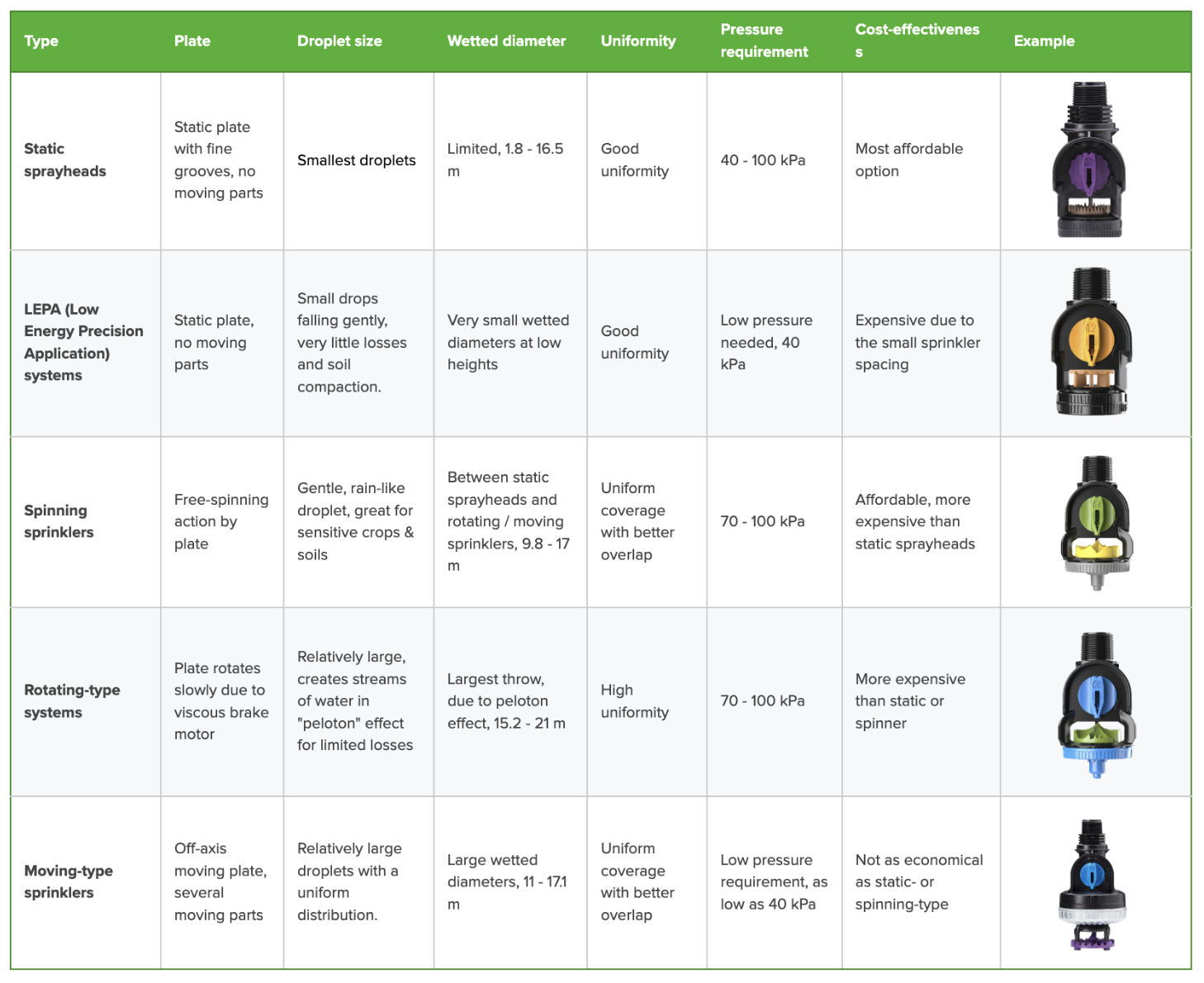
A short summary of some popular sprinklers on the market

Different types of sprinklers have their own advantages and disadvantages. Traditional static sprinklers have no moving parts. The water drops onto a static plate with fine grooves which breaks it up into very fine droplets. 

Moving or rotating spray-plate sprinklers utilise a moving plate to create consistent droplet sizes and distribute water with minimal losses and great uniformity.

See below some examples of popular sprinklers: 

It’s important to remember that every situation is different: different soils, crops, and areas all have specific needs. This can make selecting the correct sprinkler package seem complex, but that’s where Agrico’s irrigation designers come in. With the right guidance, pivot irrigation can make a big difference in both your yields and water efficiency. To read more about the importance of this decision, refer to Part 1 and Part 2 of this series. 

Related articles

Uncategorized

Absa and Agrico join forces to make pivot finance more accessible

Absa AgriBusiness has partnered exclusively with Agrico to offer qualifying clients preferential finance on new pivot irrigation systems, with interest rates from as low as prime less 2%. The partnership provides farmers with flexible repayment structures, faster turnaround times and access to Agrico’s extensive irrigation service network across Southern Africa.

Read More »